Greywater — the rinse water from showers, basins and laundry — represents 50–80% of a luxury lodge's wastewater stream. Reusing it for sub-surface irrigation can drop net water demand by 30–45% on a typical 20-suite site. The legal frame in South Africa is supportive of this reuse, but the specifics are not optional.
The applicable instruments
- National Water Act, Section 21(f) — disposal of waste. Greywater is "waste" until treated to a specified standard, at which point it becomes irrigation water.
- General Authorisation under Section 39 — covers irrigation reuse up to 500 m³/day if the treated greywater meets the GA limits (DWS, 2013).
- SANS 1732 — On-site greywater treatment systems. Sets the design and performance standard for greywater reuse systems (SABS, 2014).
- Local municipal by-laws. Several municipalities require additional notification and on-site inspection before commissioning a greywater system. Mbombela, Cape Town and Johannesburg have specific requirements.
What greywater reuse cannot do
Greywater reuse cannot include kitchen wastewater (high fat, high organic load — that goes to the main biological plant). It cannot be used for above-ground irrigation where guest contact is possible (drip and sub-surface only). It cannot be stored untreated for more than 24 hours (it goes septic). It cannot be used inside the building, even for toilet flushing, without a dual-plumbing system certified to SANS 10252-1.
What the system actually looks like
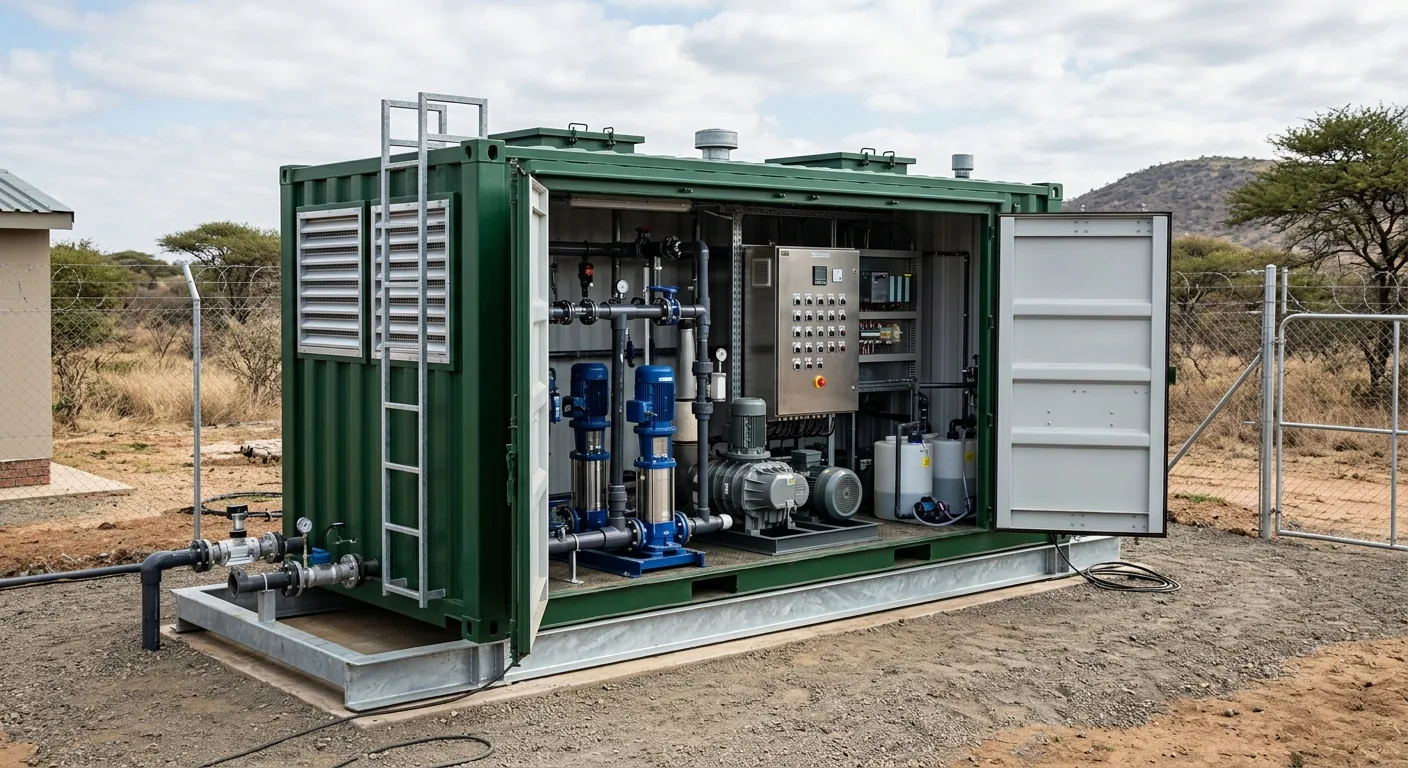
A SANS 1732-compliant greywater system on a lodge is: a collection tank with a 24-hour retention limit, a fine screen, a small biological treatment stage (often a packed-bed media filter), a UV disinfection step, and a delivery pump feeding a sub-surface drip irrigation field. Total footprint: 6–9 m² on a 20-suite site. Total energy: ~0.4 kWh/m³. Total payback against borehole-and-municipal water cost: typically 2.5–4 years (Carden et al., 2018).
Done within the standards, greywater reuse is one of the cleanest sustainability stories a lodge can tell. Done outside the standards, it is an environmental health risk and an audit liability. There is no middle ground.