The three biological wastewater technologies most often quoted on lodge sites — Moving-Bed Biofilm Reactor (MBBR), Sequencing Batch Reactor (SBR) and Membrane Bioreactor (MBR) — are not interchangeable. They make different trade-offs between footprint, energy, sludge production, effluent quality and operator skill. Pick badly and you pay forever.
MBBR — the workhorse
Suspended plastic biofilm carriers held in a continuously-aerated tank. Biology grows on the carriers, the tank stays compact, and the process is forgiving of load swings. Typical effluent: BOD < 10 mg/L, suspended solids < 15 mg/L after settling (Rusten et al., 2006). Footprint moderate. Energy moderate (aeration is the dominant load). Sludge production moderate. Operator skill: low.
SBR — the time-share approach
A single tank cycles through fill / react / settle / decant / idle phases. Cheap on civil works, intermediate on mechanical works. Excellent at nitrogen removal because the tank can be cycled through anoxic-aerobic phases without a separate reactor. Footprint slightly larger than MBBR for the same load. Energy similar. Sludge production similar. Operator skill: moderate — the control logic matters.
MBR — the premium answer
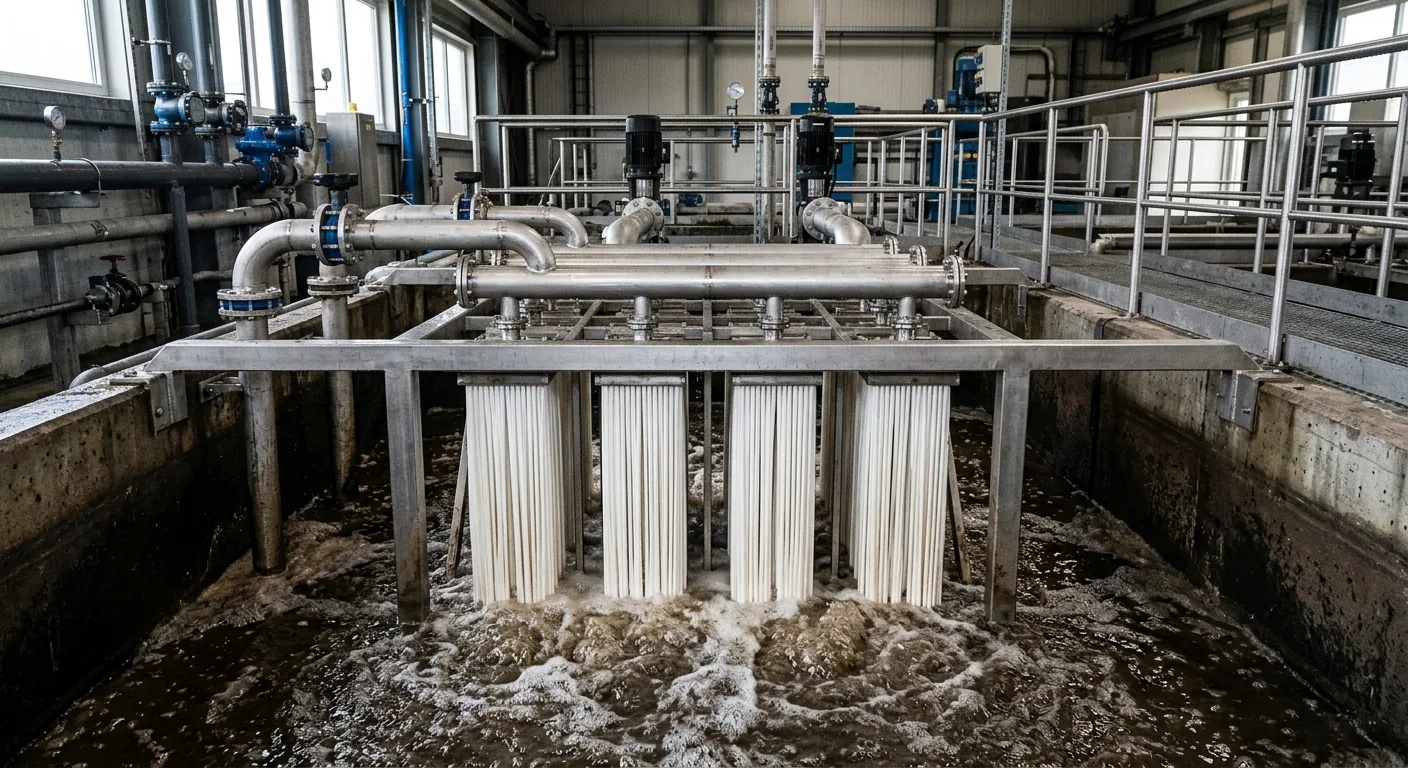
An activated-sludge reactor coupled to a submerged hollow-fibre or flat-sheet ultrafiltration membrane. The membrane replaces settling and produces effluent of essentially reuse-grade quality directly: BOD < 5 mg/L, suspended solids < 1 mg/L, turbidity < 0.5 NTU (Judd, 2010). Footprint smallest of the three. Energy highest — membrane scouring is energy-intensive. Sludge production lower. Operator skill: moderate to high; chemistry cleaning matters.
So which?
For most luxury lodges with reuse-to-irrigation as the discharge plan, our default recommendation is MBBR + UF polish — the workhorse biology with an MBR-grade finish, but with the UF outside the bioreactor so it can be cleaned without interrupting the biology. For sites with tight footprint or higher-spec reuse (toilet flush, ornamental water features), MBR earns the energy premium. For sites with strongly variable load (long shoulder seasons), SBR's time-share logic wins.
None of the three is wrong. All three are wrong for the wrong site.