Fire-Suppression Sets
The pump you hope you never need — but cannot afford to be wrong about.
The technology explained.
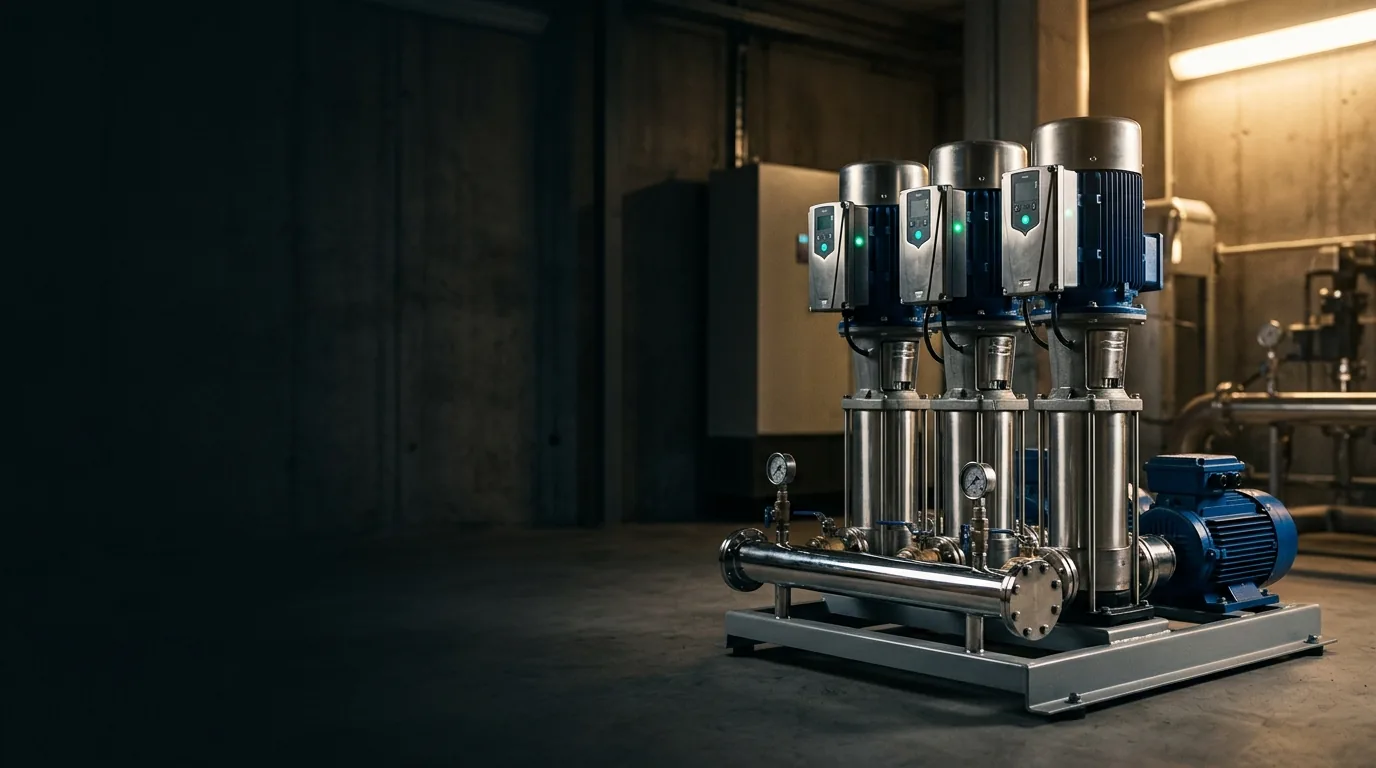
A fire pump is a dedicated, code-certified pump set sized to deliver the fire-protection design flow at a defined residual pressure. Typically diesel-driven or electric with diesel back-up, certified to UL/FM or equivalent, and tested under standards such as NFPA 20.
- Delivers fire-system design flow (litres/sec) at code-required residual pressure.
- Operates independently of municipal supply on a stored reserve.
- Tests automatically on a defined schedule with logged results.
- Interfaces with the fire-alarm panel for autostart on detection.
- Hotels, lodges and conference venues with sprinkler or hydrant systems.
- Sites with municipal supply pressure inadequate for fire duty.
- Estates and resorts with multiple buildings on a common fire main.
- Industrial sites with code-mandated fire protection.
- ×Cannot be substituted for a domestic booster — fire pumps are single-purpose and certified.
- ×Diesel installations need fuel supply, exhaust routing and weekly start tests.
- ×Storage reserve volume is dictated by the fire-protection design — assumptions cost lives.
- ×Plant room location and acoustic isolation are non-trivial on lodges with guest proximity.
Where Fire-Suppression Sets is used.
- Commercial site fire reserves
- Lodge and resort fire-defence
- Industrial fire mains
- Estate-wide fire reticulation
How HidroVerse deploys Fire-Suppression Sets.
We deliver fire-pump installations against the SANS 10287 / SABS suite and the project's fire-protection design. Certification, scheduled testing, fuel and battery maintenance are part of the engineered package — not afterthoughts.
A typical Fire-Suppression Sets treatment chain.
A fire pump is a certified, single-purpose installation — designed, witnessed and tested under code, never improvised.
Pre-treatment
Dedicated fire-reserve storage sized to the fire-protection design; flooded suction; jockey pump for system pressurisation.
Core stage
Code-certified fire-pump set (electric primary, diesel back-up where required) with controller, alarm interface and weekly self-test.
Post-treatment
Hydrant and sprinkler reticulation; isolation valves witnessed by the inspector; alarm-panel integration.
Waste handling
Diesel fuel storage, exhaust routing and weekly start-test residue managed under the fire-protection maintenance contract.
Buyer's guide.
The questions every commercial buyer should put on the table before signing for a water system. Can't see yours? Send us a brief — a HidroVerse specialist replies within one business day.
A fire pump is specifically certified for fire-suppression duty under SANS 10287-1 (and FM Approval or UL Listing where the insurer requires it). It is sized to deliver the worst-credible sprinkler or hydrant demand at the lowest-pressure outlet, regardless of building demand on the rest of the network. It cannot share duty with the potable pump for a real fire; the moment fire demand opens the system, the fire pump takes over and the potable side is isolated.
A compliant set carries: (1) a jockey pump to maintain standby pressure and absorb small leaks without triggering main pump start; (2) an electric main pump to handle full fire demand on grid power; (3) a diesel-driven backup main pump for full demand on grid failure; (4) a dedicated fire-water reserve sized for the design duration (typically 30–90 minutes); (5) controllers with auto-start interlock and a registered weekly test sequence. Anything short of this is an insurance claim waiting to fail.
Hydrant: high flow, moderate pressure to supply external fire-engine connection points. Sprinkler: matched to the worst-case sprinkler-zone demand and the most distant pressure-deficient nozzle in the design. Hose-reel: smaller, lower-flow pressure for occupant-use reels per SANS 10400 Part T. A correctly designed site carries each as a separate duty, sometimes combined into a packaged set where SANS allows.
Yes — almost always. The reserve volume is calculated against duty and duration, and the tank outlet must guarantee that the reserve cannot be drawn down by routine demand. Where a shared tank is used, a low-level interlock isolates the reserve volume from normal supply. The insurer or fire authority signs this off; we do not negotiate it down.
Weekly start-and-run test at no-flow on the jockey and the main pump; monthly flow test against the design point under controlled conditions; annual full-load test with sprinkler isolation. Testing is logged in the fire log book; the testing technician is competency-certified. We carry the certification; the on-site team carries the weekly log.
The diesel-driven main pump is independent of the building generator on purpose. A fire originating in the electrical room or affecting the main board takes the generator with it. The diesel fire pump has its own engine, its own fuel, and starts on a fall-of-pressure sensor — no electrical interconnection required.
Insurer terms vary, but most commercial fire policies require documented weekly tests as a precondition of cover. A missed test, in the event of a fire and subsequent claim, can void cover or reduce settlement. The HidroVerse Care fire schedule is calendar-driven and reported monthly to the responsible person on site.
Electric main and jockey: 15–25 years with proper testing. Diesel main: 20–30 years on the engine block, with periodic injection-system rebuild. Controllers: 12–18 years before parts availability drives replacement. The published replacement schedule is on the design pack.
Capital scales with reserve volume and duty: a small lodge package (10 m³ reserve, ~1 500 L/min) is in the low-six-figure rand range; an estate or hotel package with two duty pumps and 60–90 minute reserves runs into the seven-figures. Operating: weekly testing labour, annual fuel change, periodic engine service. All scheduled.
Primary: SANS 10287-1 (fire-water systems and pumps) and SANS 10400 Part T (fire installation in buildings). For sprinkler installations, ASIB 12th edition or NFPA-13 depending on the architect's specification. Pump sets for sprinklered hospitality typically also require FM Approval or UL Listing per the insurer. The compliance pack is delivered on commissioning, not promised.