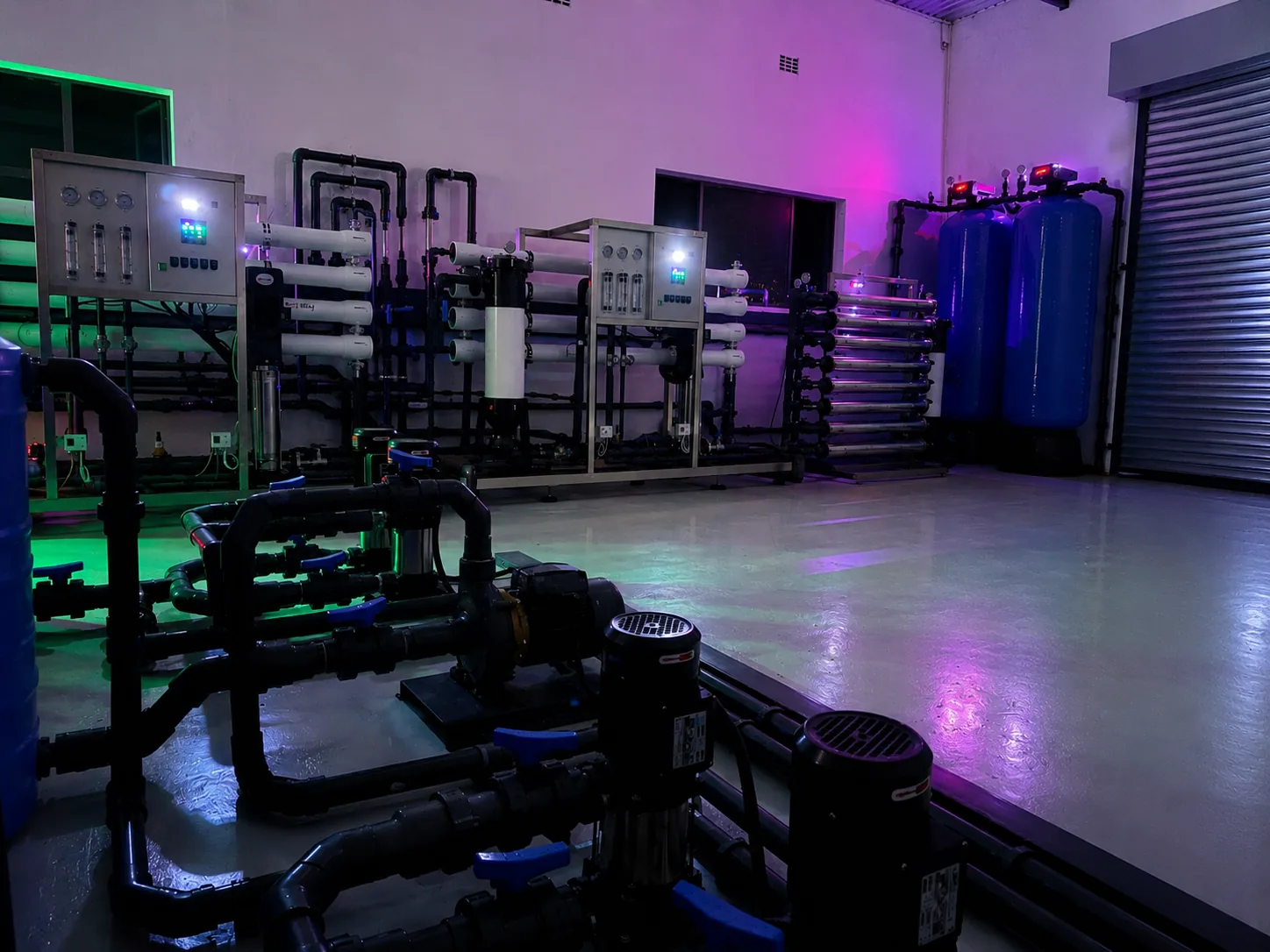
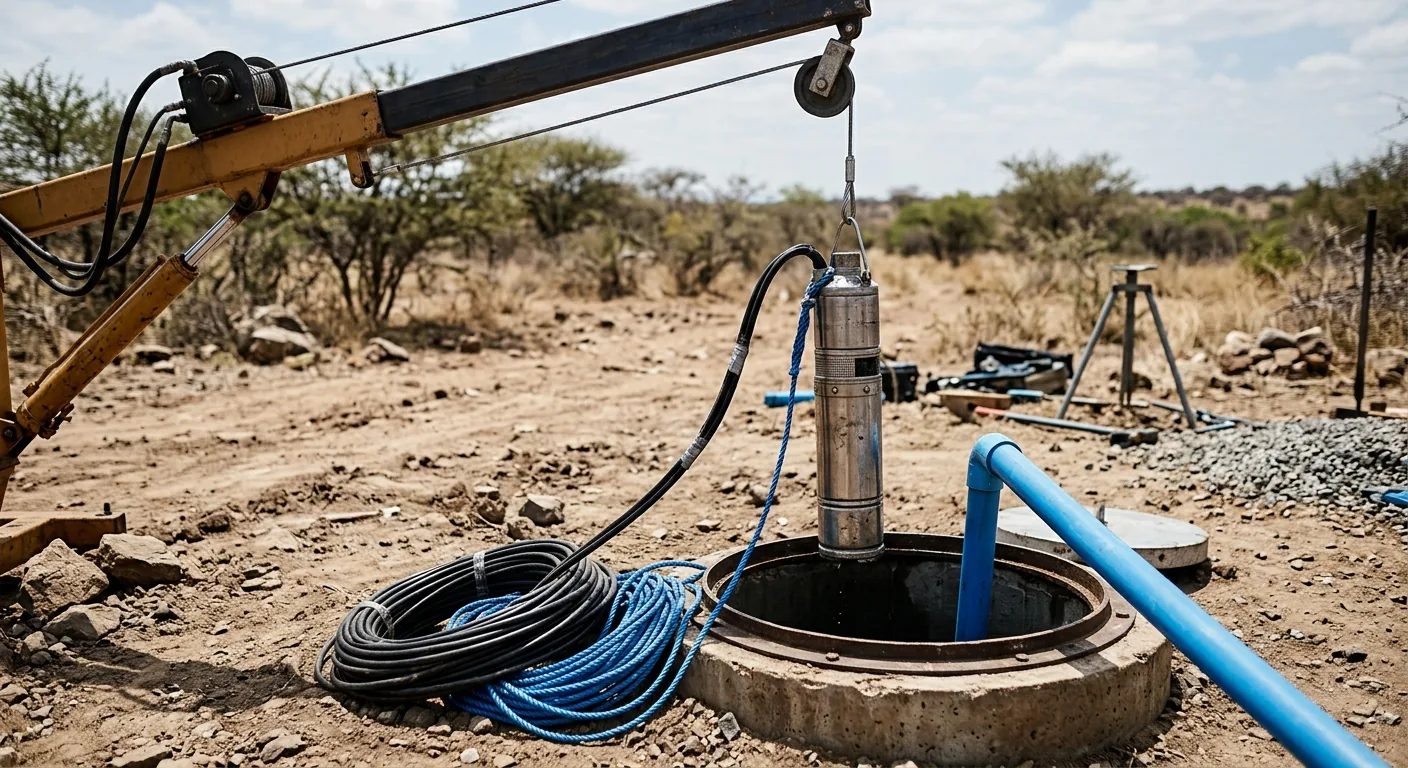
The most expensive water on any site is the water you paid to abstract, paid to treat, paid to pressurise — and lost to a buried leak before it ever reached a guest. The Department of Water and Sanitation's Non-Revenue Water benchmarking puts the national average at 35% (DWS, 2023). Even well-run private estates routinely measure 12–22%. The leak is always there. The question is whether the telemetry layer is asking the right question.
Three questions a competent telemetry layer answers
- What is the minimum night flow? Between 02:00 and 04:00, consumption on a residential estate or sleeping lodge should approach zero. A persistent baseline above 8% of average daily flow is, by definition, leak or fixture-running. This is the canonical leak detection signal (Lambert, 2002).
- What is the bulk-vs-sum balance? Compare the bulk meter reading to the sum of all downstream sub-meters monthly. Any persistent gap is loss. Track the trend, not the snapshot.
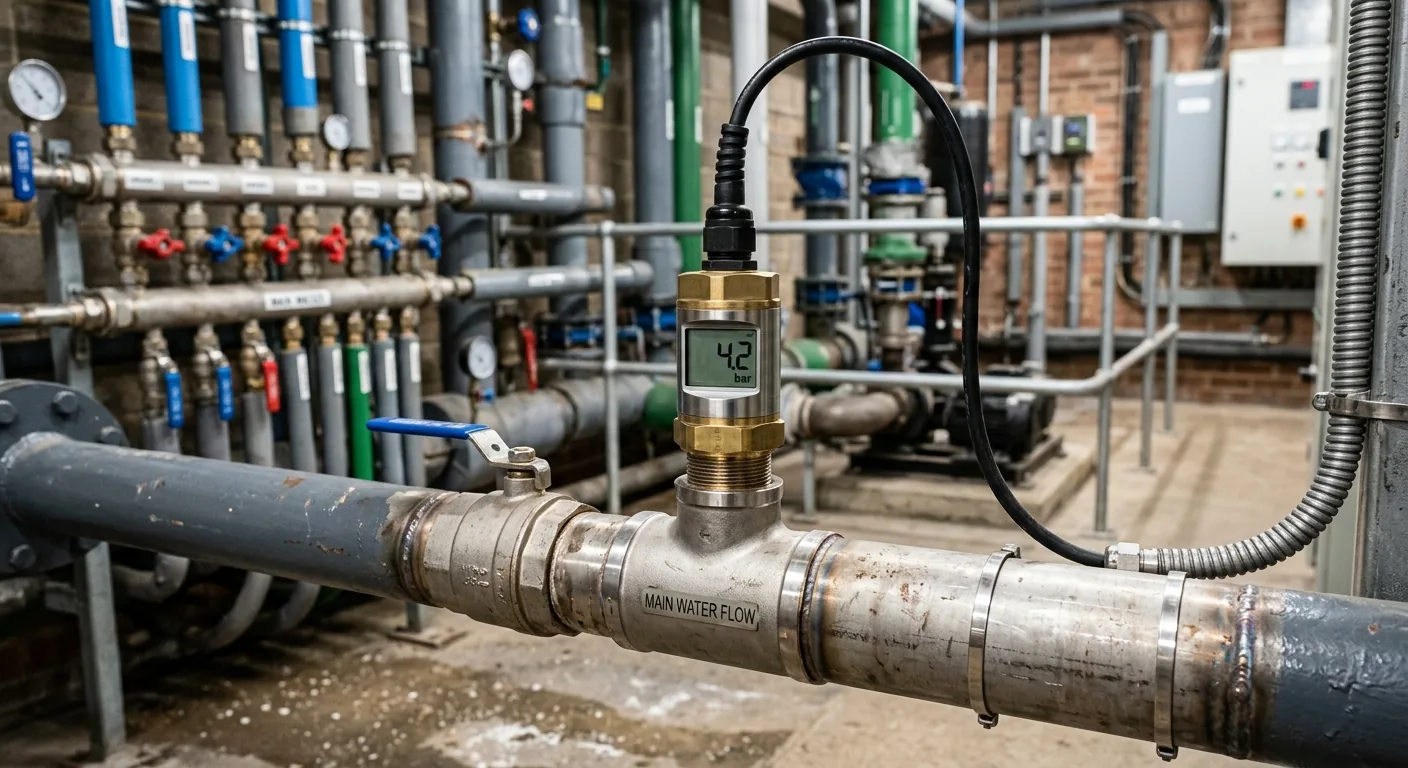
- What is the pressure profile per zone? Persistent low pressure in a zone is either a partial blockage or a leak. Persistent high pressure shortens the life of every fixture in that zone and increases the leakage volume per pinhole.
Instrumentation that delivers
A modern lodge or estate telemetry layer needs: an electromagnetic bulk meter (4–20 mA + LoRaWAN), ultrasonic sub-meters at every zone (battery, radio), a pressure transducer at the far point of every zone, and a single cloud dashboard pulling all signals to one view. The total instrumentation budget for a 20-suite lodge sits between R140k and R280k installed (2026) — recoverable inside 18 months through leak prevention on most sites we measure.
What it does not need
Acoustic correlators, dye tracing, and ground-microphone teams are second-line tools. They are dispatched after the telemetry layer has localised a leak to a zone. Treating them as first-line tools — sending the team out monthly to walk the site — is a 1990s approach that finds about 30% of what the telemetry would catch automatically.
You cannot manage what you do not measure. On water, you also cannot bill it.