Acid mine drainage (AMD) is the slow chemistry of sulphide minerals — pyrite especially — exposed to oxygen and water by mining. The exposed sulphide oxidises to sulphuric acid, which mobilises heavy metals (iron, manganese, aluminium, sometimes uranium) into the surrounding water. The process accelerates once started; it does not stop when the mine stops. The Witwatersrand basin has been generating AMD continuously since the 1880s (McCarthy, 2011).
The water-treatment problem
Raw AMD typically has pH 2.5–4.5, sulphate > 2,000 mg/L, iron 200–2,000 mg/L, manganese 30–200 mg/L. The treatment objective is to lift pH, precipitate metals, manage sulphate, and produce effluent that meets the GA limits (or a Section 21 Water Use Licence's site-specific limits) before discharge. Treatment trains are large, energy-intensive and produce substantial sludge — typically 8–15% of the treated water volume by mass (Akcil & Koldas, 2006).
The four-stage train that works
- Neutralisation. Lime dosing (Ca(OH)₂) lifts pH to 8.5–9.5, precipitating iron and aluminium as hydroxides. Cheap and well-understood. Sludge handling is the dominant operational cost.
- Aeration and oxidation. Forces remaining iron from Fe²⁺ to Fe³⁺ for precipitation. Often combined with stage 1 in a single contact reactor.
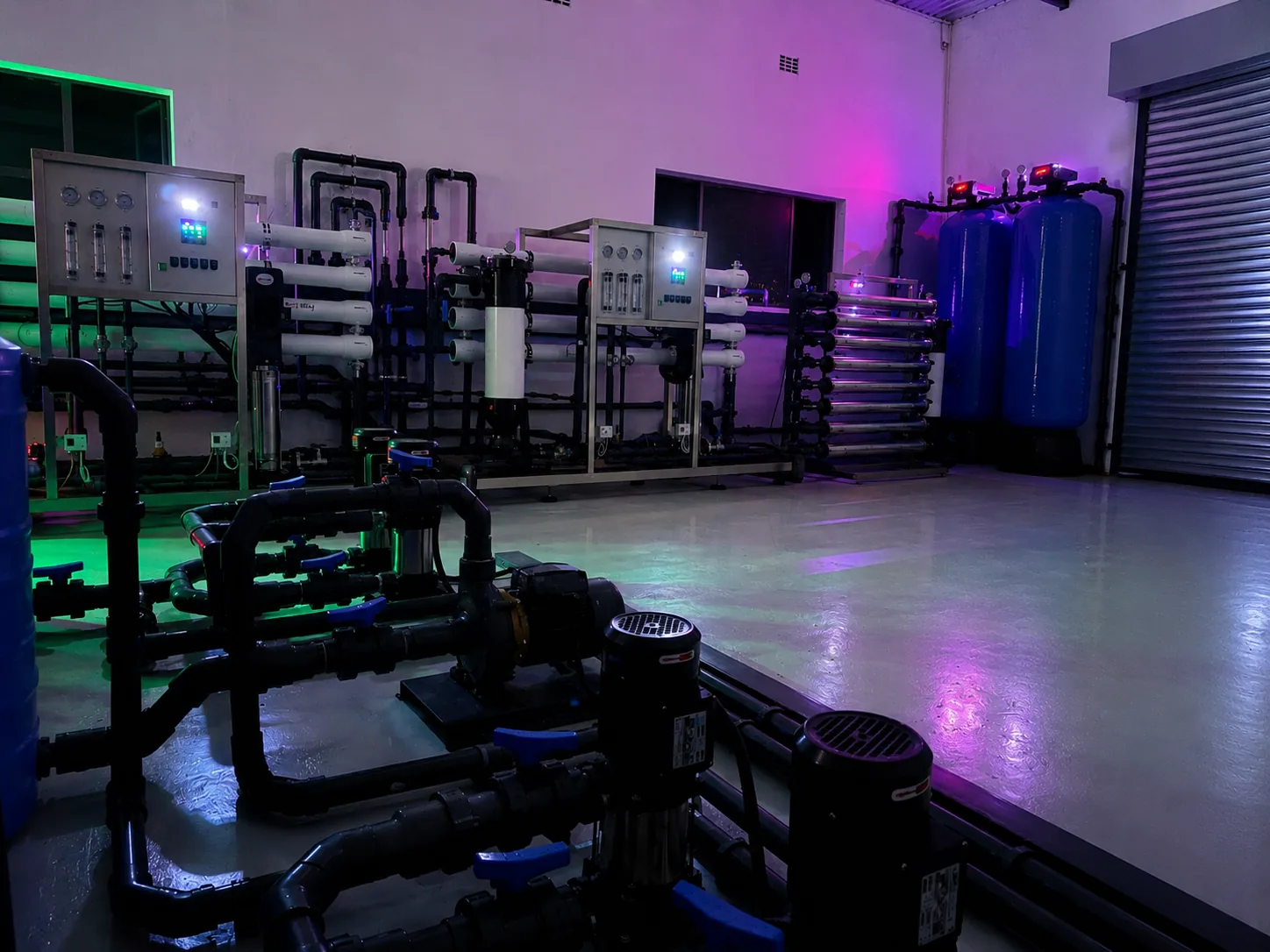
- Sulphate reduction. Optional. Required where discharge sulphate must meet drinking-water class (< 500 mg/L). Reverse osmosis, ettringite precipitation, or biological sulphate reduction. Each has a CapEx and OpEx signature.
- Polishing. Multi-media filtration, sometimes activated carbon. Final pH adjustment back to 6.5–8.5 before discharge.
The 50-year commitment
The treatment train continues after mine closure. The chemistry does not know the mine is closed. Closure plans under the Mineral and Petroleum Resources Development Act (Act 28 of 2002) require a financial provision that funds water treatment for the post-closure period — typically 30–50 years on Witwatersrand-class operations. Underestimating the duration is the single largest financial liability on a mining balance sheet.
Operators inheriting AMD from prior workings face the same chemistry without the historical revenue. The water-treatment strategy is identical; the funding model is harder. Engineering the lowest-OpEx train, with the smallest sludge stream and the highest-uptime control system, is where the next forty years are won or lost.